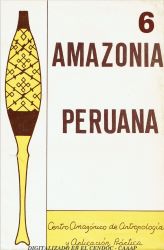
Health Ecology in Native Communities of the Peruvian Amazon
DOI:
https://doi.org/10.52980/revistaamazonaperuana.vi6.221Keywords:
Health in Native Communities, Asháninka, Machiguenga, Infectious Diseases, Parasitic DiseasesAbstract
This article is based on fieldwork conducted between 1977 and 1980 among Ashaninka and Machiguenga (Arawakan) Indigenous peoples along the Ene and Camisea rivers in Peru. Health is examined in relation to nutrition, housing, demographic data, livelihoods, health and educational services, as well as medical and laboratory analyses to determine hemoglobin, hematocrit, and serum protein levels, and the occurrence of infectious and parasitic diseases.
This research indicates that the Indigenous population is no longer isolated. The destruction of the ecosystem and the cultural domination of Indigenous peoples are undermining the social structure of the communities, leading to poor nutrition and low levels of health.
Downloads
Downloads
Published
Issue
Section
License
Copyright (c) 1982 
Esta obra está bajo una Creative Commons Attribution 4.0 International License.

This work is licensed under a Creative Commons Attribution 4.0 International License.












 Published articles are available as open access under the license